
By NEMO Outdoorsman Staff
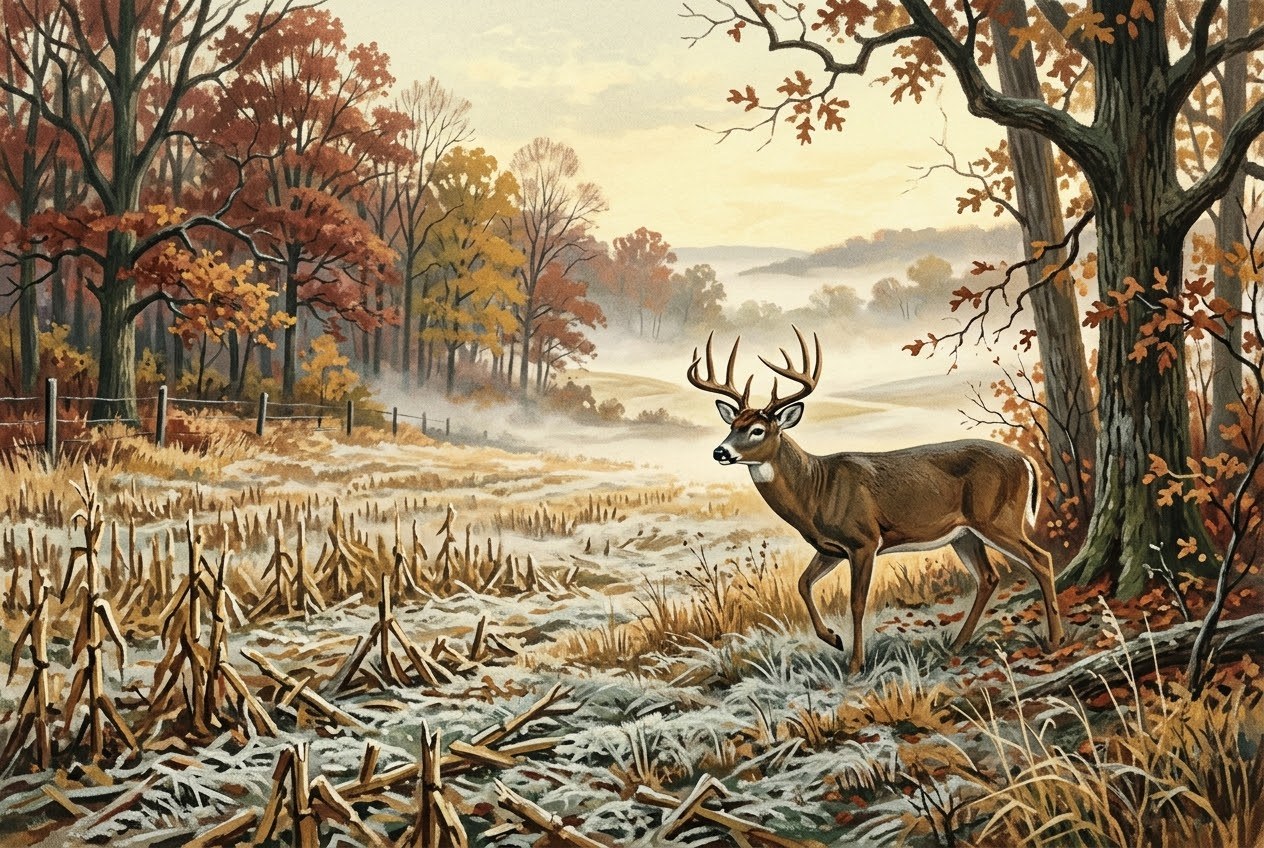
Drive any blacktop in northeast Missouri at dusk this week and you can feel it coming: more deer on the move, fresh scars on the saplings along the fencerows, bare patches of dirt pawed open at the edge of the timber. The white-tailed deer breeding season, the rut, is building toward its peak, and according to the Missouri Department of Conservation (MDC), that peak lands in mid-November, right as the November firearms portion opens Nov. 14.
Whether you bowhunt, sit a ground blind with a youngster this weekend or just watch deer from the truck, here is what is happening in the woods and what it means for you.
What the rut is
MDC’s field guide puts the peak of Missouri’s deer mating season in mid-November. Does carry fawns for about 200 days, which is why most fawns are born in late May or early June. An adult doe usually has twins, each weighing 4 to 7 pounds at birth, though single fawns and triplets happen. Most does breed for the first time at 1½ years old, and a small number breed in the same year they were born.
MDC says antler growth in Missouri usually starts in April and finishes in August, and the antlers are shed mostly in February and March. In between, the bucks put those antlers to work.
Reading the sign: rubs and scrapes
You do not have to see a buck to know one has been through. MDC describes two calling cards that show up just before and during the breeding season:
- Rubs. Bucks rub their antlers against shrubs and saplings, shredding the bark. MDC notes that a lot of rubs does not necessarily mean a lot of bucks, but that oversized rubs tend to point to older bucks. A line of rubs in a row can mark a travel route; rubs circling a thicket or small timber block may mark a buck’s core bedding area.
- Scrapes. A buck paws away the leaves to bare dirt, usually right under an overhanging “licking branch” that he rubs with his mouth and head, and urinates on the spot. Glands leave scent on the rub, the scrape and the branch, which lets deer communicate. MDC says research shows deer visit scrapes mainly at night, and many different deer, not just bucks, use them.
MDC’s advice for hunters is to focus less on any single scrape and more on the route between them. A trail camera on a scrape near a food source from mid-September to mid-November can show you which deer are moving through.
Where northeast Missouri deer travel
MDC’s field guide says Missouri deer stick closely to timber and especially use the edges where woods meet clearings and crop fields. MDC’s scouting tips fit our mix of oak ridges, creek bottoms and row crops:
- Acorns. In fall, deer leave other foods for acorns, white oak acorns most of all. In a poor acorn year, deer bunch up under the trees that did produce. Look for tracks, droppings and broken shells under the oaks.
- Field points. Deer feel safer feeding in the open with cover nearby. Where two points of timber jut into a field across from each other, deer tend to cross from point to point.
- Harvested corn. Standing corn hides deer, but picked cornfields draw them to waste grain in fall and winter.
- Pinch points. Ponds, creeks and lake arms funnel deer around coves and across pond dikes. MDC calls these excellent stand sites because trails converge there, “especially during the rut.”
If you do not have private ground, many MDC conservation areas are open to deer hunting under their own area rules. Our guide to Union Ridge Conservation Area is one place to start; check each area’s MDC atlas page for its regulations before you go.
Bow season now, firearms next
Archery deer season runs Sept. 15 through Nov. 13 and reopens Nov. 25 through Jan. 15. Missouri residents may take two antlered deer during the archery and firearms seasons combined, but only one antlered deer during archery season before Nov. 14. Youths ages 6 to 15 can buy half-price archery permits.
The firearms calendar has two dates to circle: the early youth portion this weekend, Oct. 24-25 (see our youth weekend guide), and the November portion, Nov. 14-24.
A few changes for 2026 from MDC’s deer regulations page: the antler-point restriction has been removed in all counties, the CWD Management Zone and the CWD portion of firearms season are gone, and feed, salt and minerals that attract deer are banned year-round in counties within 10 miles of a CWD detection.
In our area, hunters who take a deer in Monroe or Ralls counties on Nov. 14 or 15 must bring the deer or its head to an MDC mandatory CWD sampling station that same day (details here). Anywhere else, free voluntary CWD testing is offered all season, Sept. 15 through Jan. 15, at MDC offices, partner taxidermists and meat processors, and self-serve freezer drop-off sites.
Staying safe in rut season
More deer moving means more people in the woods and more deer crossing roads. MDC’s reminders:
- Wear orange when it’s required. During firearms deer season, anyone hunting game must wear a hunter-orange hat and a hunter-orange shirt, vest or coat, plainly visible from all sides. Camouflage orange does not count. MDC lists a few exceptions, such as migratory bird hunters. If you hunt from a ground blind, MDC suggests orange ribbon on the sides or an orange cap on the roof so other hunters can see it.
- Tree stands. Wear a full-body harness that meets Treestand Manufacturers Association standards and keep it attached to the tree the whole time your feet are off the ground. Raise and lower unloaded guns and bows with a haul line, and never climb with a loaded gun.
- Know your target. Identify a legal deer before touching the trigger or drawing the bow, know what is behind it, and never shoot at sounds in the brush. Tell someone where you will be and when you will be back.
- On the road. MDC urges drivers to be careful at night, at dusk and at dawn during the fall hunting seasons.
For the watchers, too
You do not need a permit to enjoy the rut. A timber edge at first light or a picked field at sundown can put on a show. Bring binoculars, give hunters room, and wear something bright on public land during the firearms portions.
Source: Missouri Department of Conservation, “White-Tailed Deer” field guide; MDC, “Scouting Deer”; MDC, “Stand Locations”; MDC, “Deer: Regulations”; MDC, “Deer: Safety and Health”; MDC, “Hunter Orange Requirement”; MDC, “Mandatory CWD Sampling”; MDC, “Voluntary CWD Sampling”. Confirm seasons, limits and permits with MDC before you go.